Retaining Wall Permits in Tampa: What Homeowners Should Know
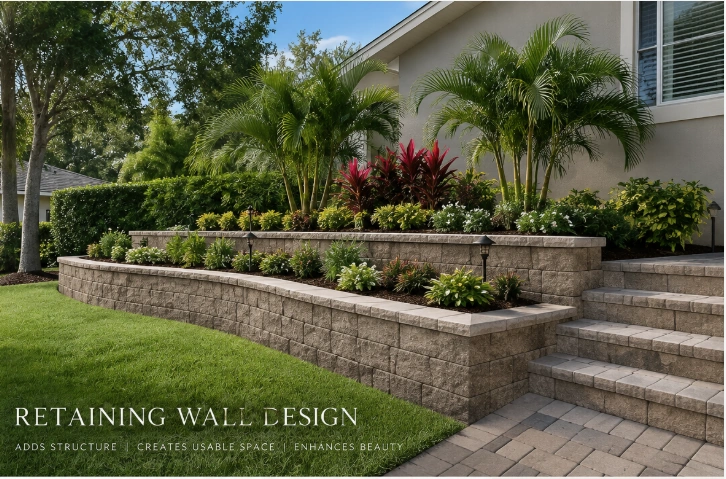
A retaining wall can add beauty, usable space, and structure to your landscape while helping manage changes in elevation and soil. But before installing one, homeowners should determine whether the project requires a permit.
In Tampa, retaining wall projects may require permitting, and the requirements depend on the specific project and location.
The City of Tampa identifies Privacy/Retaining Wall as a permit type under its residential miscellaneous permitting process. Hillsborough County also notes that most construction requires approval and permits from Building Services.
Because requirements can vary depending on the property and project, it is important to verify the applicable requirements before construction begins.
When Might a Retaining Wall Require a Permit?
Several factors can affect whether permitting, engineering, or additional approvals are necessary.
These may include:
The height of the retaining wall
The amount of soil being retained
The location of the wall
Property lines and setbacks
Nearby buildings or structures
Drainage and stormwater conditions
Flood zones or environmentally sensitive areas
Whether the wall is adjacent to a right-of-way
Whether the project is residential or commercial
The jurisdiction where the property is located
For example, City of Tampa stormwater standards contain specific provisions addressing retaining wall construction, including requirements related to wall height, materials, drainage, and location.
Retaining Wall Permits in Tampa
If your property is located within the City of Tampa, the city has a permitting category specifically identified as Privacy/Retaining Wall. Current City of Tampa guidance should be checked for the requirements applicable to your particular project.
Depending on the project, permit documentation may involve information such as the wall location, dimensions, elevations, property lines, easements, and construction details.
For larger or more complex projects, additional plans or professional engineering may be required.
What About Retaining Walls in Hillsborough County?
Properties in unincorporated Hillsborough County are subject to county requirements rather than City of Tampa requirements.
Hillsborough County states that most construction requires approval and permits from Building Services. The county also notes that if work does not qualify for an exemption, a permit will be required.
This is one reason it is important to determine which jurisdiction your property is located in before planning the project.
Drainage Is an Important Part of Retaining Wall Construction
A retaining wall is not simply a decorative landscape feature. It holds back soil, which means water management behind the wall is an important consideration.
Water that collects behind a wall can create additional pressure against the structure. Proper drainage may include systems such as:
Drainage rock
Perforated drain pipe
Filter fabric
Proper grading
Drainage outlets
Other project-specific drainage solutions
City of Tampa stormwater standards specifically address drainage considerations for retaining walls, including the need for adequate drainage in areas where a high water table is suspected.
Does a Retaining Wall Need Engineering?
Not every retaining wall project will have identical engineering requirements.
The need for engineering or additional plans can depend on the wall's height, design, location, loading conditions, drainage, and other site-specific factors.
For larger or structurally complex retaining walls, professionally prepared plans may be required.
Don't assume that a wall is exempt simply because it is being installed as part of a landscaping project.
What If the Property Is Near a Wetland or Waterway?
Additional environmental requirements may apply to properties near wetlands or natural water bodies.
Hillsborough County states that wetland setbacks can range from 30 to 50 feet, and authorization may be required when a project encroaches into a wetland setback. The county notes that limited retaining walls may be eligible for administrative approval in certain circumstances.
This is particularly important for Tampa Bay-area properties where drainage, wetlands, flood zones, and natural water features may affect site development.
Don't Forget HOA Approval
If your property is located within an HOA community, there may be additional architectural or landscaping requirements.
An HOA approval is separate from a government permit. Even if the local jurisdiction does not require a particular approval, the HOA may have its own rules regarding:
Wall location
Height
Materials
Color
Landscaping
Drainage
Property modifications
Always check your HOA requirements before construction.
How Green Roots Can Help With Your Retaining Wall Project
Planning a retaining wall involves more than choosing the block or stone you want to use.
The project should be evaluated for:
✔ Site conditions
✔ Grade changes
✔ Drainage
✔ Materials
✔ Wall design
✔ Property boundaries
✔ Permit requirements
✔ HOA requirements
At Green Roots Landscaping & Construction, we help Tampa Bay homeowners plan landscape and hardscape improvements that are designed around the property and the project's specific needs.
Whether you're looking to create a new planting area, address erosion, manage a slope, or improve the appearance of your landscape, a properly planned retaining wall can become an important part of the overall design.
Thinking About Installing a Retaining Wall in Tampa?
Before construction begins, make sure you understand the requirements that apply to your property.
Contact Green Roots Landscaping & Construction to discuss your retaining wall project and schedule an estimate.
Frequently Asked Questions
Do retaining walls require a permit in Tampa?
Retaining wall projects may require a permit. The City of Tampa specifically lists Privacy/Retaining Wall as a permit type, and requirements depend on the project.
Does Hillsborough County require a permit for a retaining wall?
Permit requirements depend on the project and location. Hillsborough County states that most construction requires approval and permits and that work not meeting an exemption may require a permit.
Does a retaining wall need engineering?
Some projects may require engineering or additional plans depending on the wall's design, height, location, loads, drainage, and site conditions.
Can I build a retaining wall near a wetland?
Additional environmental requirements may apply. Hillsborough County has wetland setback requirements and a specific process for projects that encroach into those setbacks.
Does an HOA need to approve my retaining wall?
Your HOA may have separate requirements even when a government permit is not required. Check your community's rules before beginning construction.
Do retaining walls need drainage?
Proper drainage is an important consideration for retaining wall construction because water accumulation behind a wall can increase pressure on the structure. Project-specific drainage requirements should be evaluated during planning.
Important Disclaimer
Permit and construction requirements can change and may differ between the City of Tampa, Hillsborough County, and other municipalities in the Tampa Bay area. The information in this article is provided for general educational purposes and should not be considered legal, engineering, or permitting advice. Always verify current requirements with the applicable permitting authority before beginning construction.