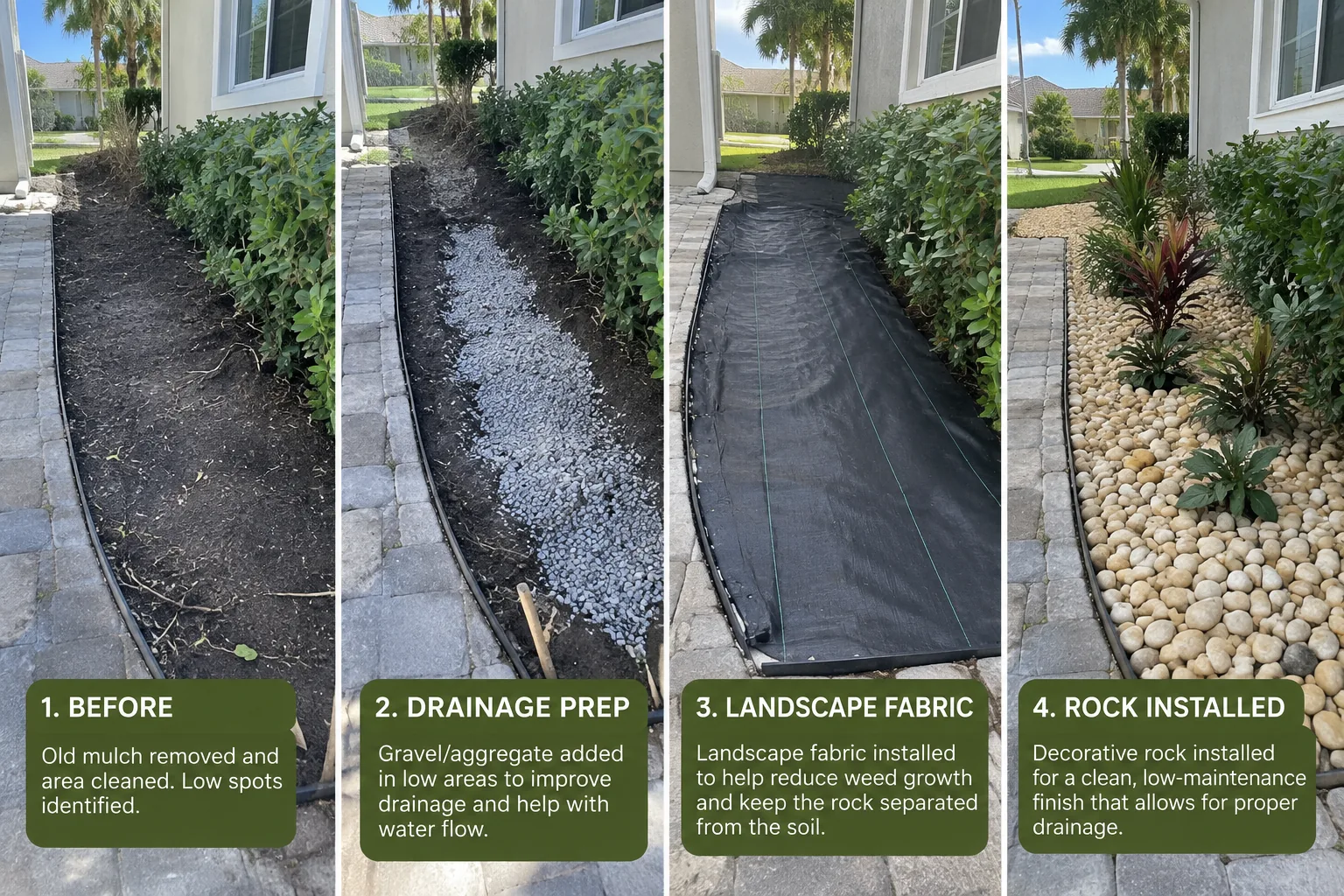
Rock landscaping can transform a yard with a clean, polished appearance while providing a durable alternative to traditional mulch or other ground coverings. However, installing decorative rock correctly requires more than simply spreading stone across the landscape.
In Florida, where heavy rain, sandy soil, heat, and drainage issues are common, proper preparation is especially important. Whether you're updating a small flower bed, creating a rock garden, or installing a larger landscape area, these essential rock installation tips can help create a beautiful and long-lasting result.
1. Start With Proper Site Preparation
One of the most important steps in any rock landscaping project happens before the first rock is installed.
The area should be cleared of weeds, unwanted vegetation, roots, and debris. The soil should then be graded appropriately to encourage water to move away from structures and toward the intended drainage areas.
Skipping site preparation can result in uneven surfaces, weed growth, erosion, and rocks that shift or wash away during heavy Florida rain.
2. Consider Drainage Before Installing Rock
Florida's frequent heavy rainfall makes drainage one of the most important considerations when installing landscape rock.
Before installation, evaluate how water currently moves through the property. Areas where water collects may require additional grading or drainage solutions before decorative rock is installed.
Rock itself does not automatically solve drainage problems. In fact, installing rock over a poorly draining area without correcting the underlying issue can leave standing water and create additional landscape problems.
3. Use Landscape Fabric When Appropriate
Landscape fabric can help create a separation between the soil and decorative rock while reducing weed growth.
The fabric should be installed over properly prepared soil and secured so it stays in place during installation and heavy rain.
However, landscape fabric isn't appropriate for every landscape application. The right approach depends on the type of rock, the plants surrounding the area, drainage requirements, and the overall design.
4. Choose the Right Type and Size of Rock
Not all landscape rock performs the same way.
Different materials and sizes can create very different appearances and serve different purposes. Options may include:
- River rock
- Mexican beach pebble
- Decorative gravel
- Crushed stone
- Lava rock
- White or light-colored decorative stone
- Larger feature rocks and boulders
When selecting rock, consider the color and style of your home, surrounding plants, drainage needs, maintenance requirements, and how the material will look when wet or dry.
5. Create a Properly Defined Edge
A clean edge can make a major difference in the finished appearance of a rock landscape bed.
Landscape edging, concrete borders, pavers, or another appropriate border can help keep rock contained and create a defined transition between the landscape bed and lawn or driveway.
Without proper edging, smaller rocks can gradually migrate into the surrounding grass, especially after mowing, foot traffic, and heavy rain.
6. Install Rock at the Correct Depth
Installing too little material can leave the landscape bed looking unfinished and allow weeds to become more noticeable.
Installing too much rock can increase the project's cost unnecessarily and may make the bed difficult to maintain.
The appropriate depth depends on the material being installed and the purpose of the area. A professional landscape contractor can calculate the amount of material needed based on the square footage and desired coverage.
7. Think About Plants and Rock Together
Rock landscaping should complement the plants around it rather than compete with them.
Florida-friendly plants can be paired with decorative rock to create attractive, low-maintenance landscape beds. Consider using different plant heights, textures, and colors to create visual interest.
For example, ornamental grasses, palms, shrubs, and flowering plants can be incorporated into a rock landscape design while leaving enough space around plants for healthy growth.
8. Consider Florida's Heat
Dark-colored rock can absorb and retain significant amounts of heat in Florida's intense sun.
This can affect plants growing directly next to the rock, particularly plants that prefer cooler root conditions.
When designing a rock bed, consider the location of the landscape, the amount of direct sunlight, and the plants being installed. Choosing appropriate materials and plant placement can help create a healthier landscape.
9. Plan for Maintenance
One of the advantages of rock landscaping is that it can reduce some routine maintenance compared with traditional mulch. However, rock landscapes are not completely maintenance-free.
Over time, you may need to:
- Remove leaves and debris
- Pull occasional weeds
- Rake displaced rock back into place
- Clean heavily soiled areas
- Add rock to areas where material has migrated
- Maintain surrounding plants and edging
Regular maintenance helps keep the landscape looking clean and professionally installed.
10. Don't Use Rock to Cover an Existing Problem
Rock can improve the appearance of a landscape, but it shouldn't be used to hide underlying problems.
If an area has persistent standing water, severe erosion, failing irrigation, compacted soil, or drainage problems, those issues should be addressed before installing decorative rock.
A beautiful surface is only part of a successful landscape. Proper preparation underneath the rock is what helps the installation perform over time.
Professional Rock Landscaping in Tampa Bay
A successful rock installation starts with proper planning, drainage evaluation, site preparation, material selection, and installation.
At **Green Roots Outdoor Services**, we help homeowners create attractive outdoor spaces designed for Florida's unique landscape conditions. From decorative rock beds and landscape renovations to planting and other outdoor services, our team can help turn an outdated or difficult landscape area into a clean, functional outdoor space.
If you're considering decorative rock for your Tampa Bay property, proper preparation can make all the difference.
**Ready to transform your landscape? Contact Green Roots Outdoor Services to discuss your rock landscaping project.**